

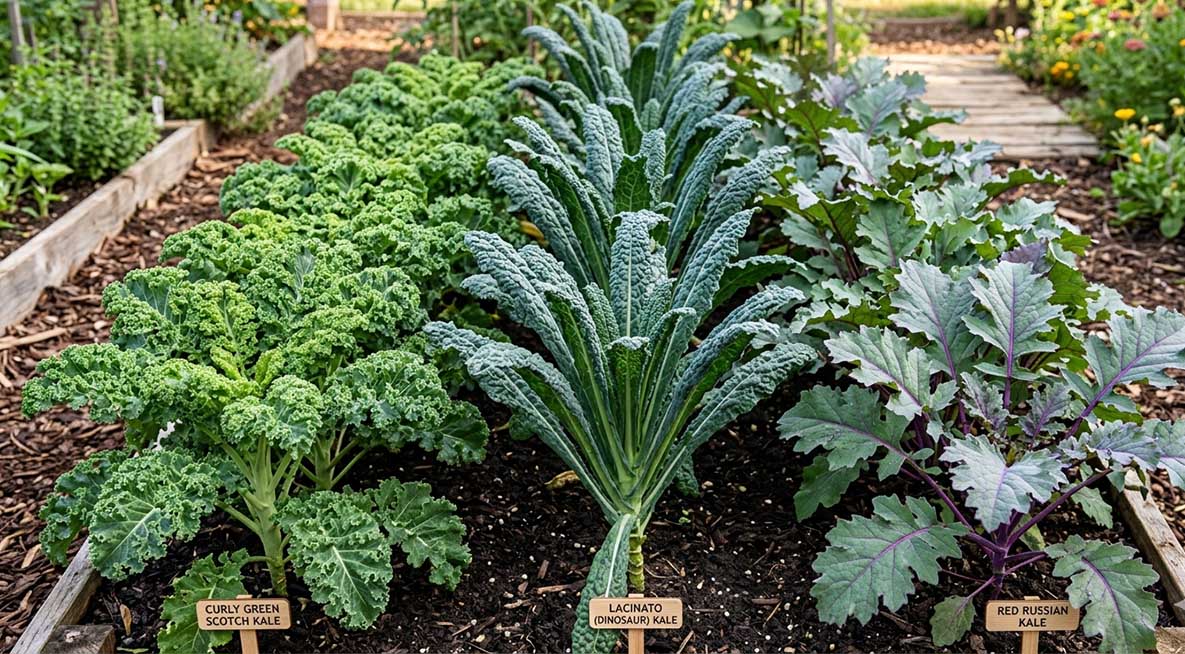
Kale has a reputation as a health-food superfood, which honestly undersells it as a garden crop.
What kale really is: one of the most cold-hardy, low-maintenance, long-producing vegetables you can grow. A single planting in early spring can give you harvests through summer, fall, and — in Zone 6 and warmer — all through winter. Nothing tastes better in January than kale that’s been sweetened by multiple hard frosts.
The cut-and-come-again technique turns a single plant into months of continuous harvest. This guide covers exactly how to do it — plus the variety decision that matters most, and why autumn-planted kale usually outperforms spring-planted.
Quick Guide (How to Grow Kale): Sow kale seeds ¼ inch deep 4–6 weeks before last frost (spring) or 6–8 weeks before first frost (fall crop). Thin to 18–24 inches. Harvest outer leaves consistently — never the growing tip. Kale gets sweeter after frost. In Zones 6+, it overwinters and provides harvests in late winter before bolting.
Why Kale Outlasts Almost Every Other Garden Vegetable
Most vegetable gardens go quiet by late fall — frost takes the tomatoes, the beans are long finished, and the lettuce has bolted or been overtaken by heat weeks earlier.
Kale is the rare exception that keeps producing through that entire decline and often well past it. Its cold tolerance isn’t a marginal trait either; established kale plants routinely shrug off temperatures into the low 20s and, with a bit of protection, considerably colder than that.
That resilience comes from the same biological mechanism behind the frost-sweetening flavor change: kale concentrates sugars in its leaf cells as a kind of natural antifreeze, which both protects the plant from cold damage and happens to make the leaves taste noticeably better.
Few vegetables turn a stressor into an advantage this directly, which is part of why so many experienced gardeners treat kale as much a cool-season specialty crop as a summer one.
Choosing Your Kale Variety
| Variety | Type | Flavor | Best For |
|---|---|---|---|
| Lacinato (Dinosaur / Tuscan) | Flat, dark blue-green leaves | Mildest, most complex | Cooking, pasta, soup; the chef’s kale |
| Curly Scotch | Tightly ruffled leaves | Stronger, more bitter when raw | Chips, smoothies, cooking; most cold-hardy |
| Red Russian | Flat, oakleaf-shaped, purple stems | Sweetest raw, mildest overall | Salads, raw preparations; most tender |
| Dwarf Blue Curled | Compact curly plant | Mild | Small spaces, containers; slow to bolt |
Lacinato for cooking (Italian cooking was built around this variety — there’s a reason). Red Russian for raw eating and salads. Plant both and you’ll have a variety for every use. Both are productive, beautiful, and easy to grow.
Soil and Site Preparation
Kale isn’t particularly fussy about soil, but because you’re asking a single planting to keep producing for months — sometimes the better part of a year in mild climates — it pays to start with soil that has real reserves of organic matter and nutrition.
Work 2–3 inches of finished compost into the bed before sowing or transplanting, and aim for a pH between 6.0 and 7.5, which kale tolerates comfortably across that whole range.
Choose a site that gets full sun during the warmer months but consider how that same spot performs in winter if you’re hoping to overwinter plants in a colder climate.
A location with some protection from harsh winter wind — near a fence, wall, or evergreen hedge — can meaningfully extend how late into the season your kale stays productive without needing a row cover or cold frame.
How to Grow Kale: Step by Step
Step 1 — Spring Sowing or Fall Sowing?
Both work, but fall-planted kale often outperforms spring-planted — here’s why. Kale planted in late summer establishes through the mild fall temperatures before facing its first challenges, and as temperatures cool, the plant redirects energy from growth to sugar production.
By contrast, spring-planted kale faces increasing heat stress as it matures, which can trigger early bolting. If you can only plant once, plant in late summer for fall through winter harvest.
Directions — Direct Sowing
- Sow seeds ¼ inch deep, 3 seeds every 18 inches. Kale germinates in 5–8 days at 60–70°F.
- Thin to one plant per 18–24 inches when seedlings are 3 inches tall. Kale needs space — crowded plants compete heavily and never develop full leaf production.
- For fall planting: count 6–8 weeks before your first expected frost date and sow then. Plants need time to establish before hard freezes set in.
Step 2 — Water and Feed for Strong Leaf Production
Watering: 1–1.5 inches per week. Kale tolerates drought better than most greens but produces tougher, more bitter leaves when water-stressed. Consistent moisture = tender, productive plants.
Fertilizing: Kale is a heavy nitrogen feeder — it’s all about leaf production. Side-dress with a nitrogen fertilizer (21-0-0 or balanced 10-10-10) every 4–6 weeks from spring through late summer. Stop feeding in fall — you want the plant’s energy going into cold-hardening, not producing tender new growth that frost will damage.
Step 3 — Cut-and-Come-Again Harvesting
This is the technique that makes kale so productive over such a long season. Always harvest outer, lower leaves. Always leave the central growing tip and the newest 4–6 inner leaves completely untouched. The growing tip is the plant’s only source of new leaf production — damage it and your harvest stops.
Harvest Directions
- Snap or cut the stem of outer leaves where it meets the main stalk, pulling downward.
- Never harvest more than ⅓ of the plant’s leaves at one time.
- Leave the center growing point completely intact — always.
- Return in 1–2 weeks. In good conditions, a harvested kale plant rebounds remarkably quickly.
For exact timing signals and what to do as kale heads toward bolting, see our when to harvest kale guide.
Step 4 — Winter Protection in Cold Climates
In Zone 5 and colder, kale needs protection to overwinter. The plants themselves are cold-hardy to about 10°F — but repeated freeze-thaw cycles without protection eventually damage them.
A low tunnel of frost cloth over your kale bed extends production into December in Zone 5 and often through winter in Zones 6–7. Plants that survive winter rebound dramatically in early spring and often produce their most tender leaves before bolting as days lengthen.
Kale as a Continuous, Multi-Season Crop
One detail that often surprises new growers: a single kale planting, given the right care and a moderate climate, can genuinely span three seasons of harvest from one sowing.
A late-summer-sown plant establishes through fall, produces through a protected winter, and then often gives one final, particularly tender flush of growth in very early spring before bolting as days lengthen and temperatures climb. Very few vegetables offer that kind of return on a single planting effort.
If you’re working with limited bed space and want to maximize what a small kale planting can give you, this multi-season behavior is worth planning around deliberately rather than treating kale as a one-and-done seasonal crop the way you might tomatoes or beans.
A few well-placed, well-protected plants can quietly outproduce a much larger planting of something that only has a single, shorter harvest window.
Frequently Asked Questions
Does kale actually taste better after frost?
Yes — this is real and scientifically documented. Cold temperatures trigger the plant to convert starches to sugars as a form of antifreeze protection.
A kale plant that’s endured several hard frosts has measurably higher sugar content than the same variety harvested in September. The transformation is dramatic enough that experienced growers often prefer fall and winter kale to summer harvests.
Why is my kale bitter?
Summer heat is the primary cause. Kale produces more glucosinolates (the bitter sulfur compounds) in response to heat stress and pest pressure. Solutions: harvest in the cool of morning, choose milder varieties like Red Russian, or simply cook it — heat neutralizes most bitterness through chemical breakdown.
Can I grow kale in containers?
Yes, but use a large container — at least a 5-gallon pot per plant. Dwarf Blue Curled is the most compact variety suited to containers. Feed every 2–3 weeks with a liquid nitrogen fertilizer since containers deplete nutrients faster than beds.
How many kale plants do I need for regular use?
For a household that eats kale a few times a week, 4–6 plants using the cut-and-come-again method is typically enough, since each plant keeps producing for months rather than giving a single harvest.
If you’re planning to freeze or dehydrate a surplus for winter use beyond what the live plants are providing, 8–10 plants gives more of a working margin.
🥬 Related Articles in Our Vegetable Gardening Guide
Final Thoughts
We hope this guide has convinced you that kale is worth a spot in your garden — and that the frost-sweetening secret is worth planning around. For all our vegetable growing guides, our vegetable gardening guide links to everything.
Share this post with a fellow gardener who’s ready to grow their own — and let us know in the comments which variety you’re planting and whether you’re going spring or fall. Happy growing!
