

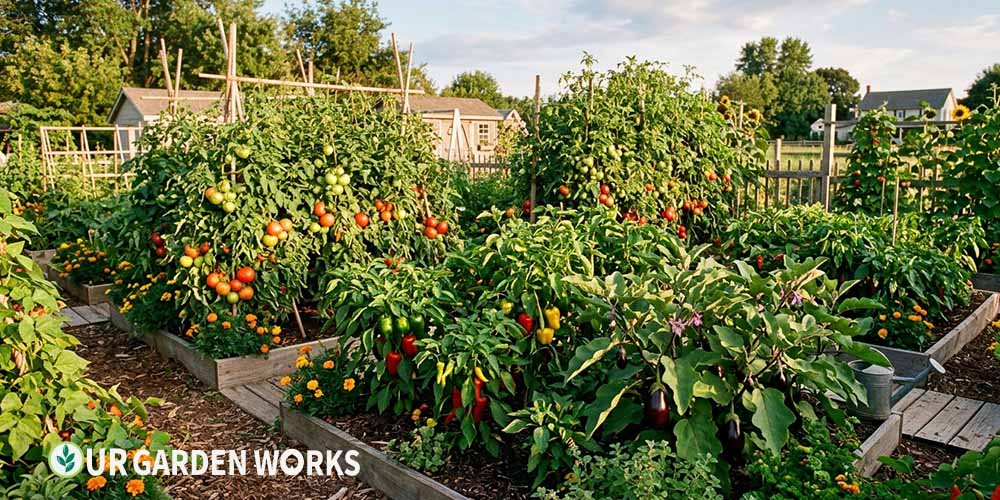
Every vegetable gardener knows the frustration of a summer slump — the lettuce bolted, the spinach turned bitter, the peas stopped producing by July. Summer gardening feels like fighting the season.
The solution is not to battle the heat but to plant vegetables that genuinely need it. These 22 crops do their best work when temperatures climb into the 80s and 90s, producing more abundantly, more flavourfully, and with less trouble than any cool-season crop trying to survive July.
Quick Answer: The best heat-loving vegetables for summer gardens are tomatoes, peppers, eggplant, cucumbers, zucchini, squash, beans, corn, okra, sweet potatoes, melons, and basil. All require soil temperatures of 65°F or warmer to establish well and produce their best yields in sustained summer heat.
Tier 1 — Absolute Heat Lovers (Soil Temp 65–75°F to Plant)
1. Tomatoes
The summer garden anchor. Tomatoes need soil at 60°F minimum and air temperatures of 65–85°F for fruit set — they actually stop setting fruit above 95°F and below 55°F at night. The 70–85°F window is their productive sweet spot.
Bush varieties (Patio, Celebrity, Early Girl) are more manageable in small spaces; indeterminate types (Cherokee Purple, Sun Gold, Brandywine) produce until frost with staking.
Start indoors 6–8 weeks before last frost — see our complete guide to growing tomatoes from seed. Transplant after all frost risk has passed.
To find your last frost date – Try our free tool: Frost Dates Lookup Tool — Spring & Fall Frost Dates by ZIP Code
2. Peppers
Even more heat-demanding than tomatoes. Peppers need soil temperatures above 65°F to establish, struggle to set fruit below 60°F at night, and produce their most prolific crops when daytime temperatures hold 80–90°F for weeks.
Like tomatoes, they stop setting fruit above 95°F — but unlike tomatoes, they resume production when temperatures moderate in late summer, often giving a second flush in August and September. Both sweet and hot varieties follow the same temperature requirements.
3. Eggplant
The most heat-demanding common garden vegetable. Eggplant genuinely sulks in cool weather and produces poorly until daytime temperatures consistently exceed 75°F.
It rewards patience — slow to start, but once heat arrives, eggplant produces continuously with minimal care. Japanese varieties (long, slender) mature faster than Italian types and handle summer heat in shorter-season climates. Never rush transplanting eggplant into cold soil.
4. Okra
Thrives at temperatures that would stress every other garden vegetable — 85–95°F is okra’s ideal growing range.
It grows slowly in anything below 70°F and hits its stride when summer heat is at its most intense. Direct sow after soil reaches 65°F; soaking seeds overnight improves germination. Harvest pods at 3–4 inches every 2 days — pods become woody and inedible in days if left on the plant.
5. Sweet Potatoes
Sweet potatoes need 90–120 frost-free days of warm weather and produce their best tubers when soil temperatures stay above 65°F throughout the growing season. They grow from slips (rooted cuttings), not seed.
Plant slips 2 weeks after last frost when soil is reliably warm. They tolerate drought and poor soil better than almost any other vegetable — low maintenance once established.
Tier 2 — Strong Heat Performers (Plant After Last Frost)
6. Cucumbers
Cucumbers grow fastest in 75–85°F temperatures and produce their best fruit in sustained summer heat.
They go from seed to first harvest in 50–60 days in warm conditions. Direct sow or transplant after soil reaches 60°F. Keep well-watered — inconsistent moisture is the primary cause of bitter cucumbers. Trellis for cleaner fruit and better air circulation.
7. Zucchini and Summer Squash
The most productive summer vegetable per square foot. In peak production, a single zucchini plant can produce 4–6 fruits per week.
The challenge is keeping up with harvesting — zucchini left on the plant grows into inedible baseball bats within 48 hours. Harvest at 6–8 inches every 2 days for continuous production.
8. Winter Squash (Butternut, Acorn, Spaghetti)
Planted in early summer for fall harvest. Winter squash needs 85–100 frost-free days and develops its sweetest flesh when the season includes both hot summer days (for growth) and cooling autumn nights (for sugar conversion). Excellent storage life — keeps 3–6 months after harvest.
9. Bush Beans
One of the easiest summer crops. Direct sow when soil reaches 60°F — beans do not transplant well.
They produce in 50–60 days and are done for the season by mid-summer. Succession sow every 3 weeks from last frost through mid-July for a continuous harvest window rather than a single glut.
10. Pole Beans
Same requirements as bush beans but produce over a longer season — 8–10 weeks versus 3–4 for bush types. They require a trellis or pole to climb and take a week or two longer to first harvest, but yield more total beans per plant and continue into late summer heat.
11. Lima Beans
Among the most heat-demanding beans — they set pods poorly below 70°F at night and really come into their own when nights stay warm through summer. Patience is required; they are slower than bush beans but worth the wait.
12. Sweet Corn
Plant in blocks of at least 4 rows for wind pollination. Direct sow when soil reaches 60°F and air temperatures are reliably above 50°F at night.
Corn needs 65–90 days and is one of the thirstiest summer vegetables — consistent moisture during tasseling and silk development is critical for full kernels.
13. Melons (Watermelon, Cantaloupe, Honeydew)
Melons need the most heat-accumulation of any common vegetable — 80–100 frost-free days of sustained warmth.
In northern zones (5 and colder), start indoors 3–4 weeks before last frost and use black plastic mulch to keep soil warm.
In Zone 6 and warmer, direct sowing works well. Reduce watering significantly as fruit nears maturity for the best flavour concentration.
14. Tomatillos
Related to tomatoes but more productive in heat. Two plants are the minimum for cross-pollination.
Tomatillos are ready when the papery husk splits slightly and the fruit fills the husk completely. Highly productive — two established plants produce more than most families can use.
Tier 3 — Summer Herbs That Thrive in Heat
15. Basil
The companion of tomatoes in the garden and on the plate. Basil is genuinely tropical and suffers below 50°F — even cold nights cause black spotting on leaves.
In full summer heat it grows rapidly and rewards regular pinching (removing flower tops) with bushy, productive plants all season. Genovese for pesto; Thai basil for Asian cooking; Lettuce Leaf for the largest leaves.
16. Lemon Verbena
Intensely aromatic perennial herb (annual in Zone 6 and colder) that grows vigorously in summer heat, producing lemon-scented leaves for teas, desserts, and cocktails.
17. Roselle (Hibiscus sabdariffa)
Tropical hibiscus grown for its tart calyxes, used in hibiscus tea. Genuinely loves heat and humidity — grows 4–6 feet tall by late summer. An underused summer crop with dramatic ornamental value.
18. Edamame
Soybeans harvested at the green stage. Direct sow when soil is 65°F+. Harvest when pods are plump and bright green — before they begin to yellow.
The entire crop is typically ready within a 1-week window, so plant 2–3 successions for a longer harvest period.
19. Malabar Spinach
Not a true spinach but a tropical vine that produces spinach-flavored glossy leaves through the entire summer, including during the heat that makes real spinach bolt immediately. An excellent summer substitute for the spinach that fails every July.
20. Armenian Cucumber
Technically a melon that tastes like cucumber. Handles heat and drought better than standard cucumbers, produces fruit up to 3 feet long, and continues producing in temperatures that would cause standard cucumbers to bitter and fail.
21. Long Beans (Yardlong Beans)
Asian pole bean variety that produces 18-inch long pods in sustained heat — actually prefers temperatures that would stress standard beans. More heat-tolerant than any common bean variety and very productive in summer.
22. Pumpkins
Plant in early June for October harvest. Pumpkins need 90–120 days of warm weather — planting too late means frost kills them before maturity. Large vines need 50+ square feet; bush varieties fit in half that. One of the most satisfying summer-to-fall crops in any climate that gets 90+ frost-free days.
Building a Garden That Keeps Producing All Summer
The list above covers individual crops, but the real payoff comes from thinking about how they fit together across the season rather than planting all 22 on the same day and hoping for the best.
Quick producers like bush beans and summer squash are worth succession sowing every few weeks specifically because their productive window is short — a single planting gives you a glut followed by nothing, while staggered plantings give you a steady supply from June through September.
Slower, longer-season crops like melons, winter squash, and pumpkins are a one-shot investment instead: get the timing right at planting and then mostly leave them to do their thing through the heat.
It’s also worth deliberately pairing a few heat-tolerant crops with the cool-season vegetables you’re losing to bolting and bitterness.
As your spring lettuce and spinach finish up in early summer, that same bed space can go straight into bush beans, a second round of cucumbers, or a late planting of summer squash — keeping the bed productive instead of sitting empty or weedy through the hottest months while you wait for fall planting season.
Frequently Asked Questions
What vegetables can I plant in June for summer harvest?
In June you can still plant: bush beans (harvest August), cucumbers (harvest August), summer squash (harvest July), basil, okra (harvest August–frost), sweet potatoes (harvest October), and late-season corn.
Tomato and pepper transplants can go in through mid-June in most zones for a late-summer harvest. For specific planting windows by zone and crop, our seed starting calculator gives exact dates.
My tomatoes and peppers look healthy but are not setting fruit in summer heat — why?
When daytime temperatures consistently exceed 90–95°F, tomatoes and peppers drop their flowers without setting fruit — a natural response to protect the plant from producing fruit it cannot ripen before heat-related damage. This is called heat-induced blossom drop.
The solution is patience and shade cloth during the worst heat. Most plants resume setting fruit when temperatures drop below 90°F in late August, giving a productive fall flush.
Can I still get a harvest if I'm starting a heat-loving vegetable garden late in the season?
Often yes, depending on the crop and your remaining frost-free days. Fast producers like bush beans, summer squash, and cucumbers can still deliver a meaningful harvest planted as late as early-to-mid summer in most zones.
Longer-season crops like melons, winter squash, and pumpkins are far less forgiving of a late start — count backward from your first expected fall frost using the variety’s days-to-maturity number, and if the math doesn’t work, it’s better to plan for next year than to plant something that won’t have time to finish.
Related Guides:
Final Thoughts
We hope this list helps you build a summer garden that actually thrives instead of one you are constantly nursing through the heat.
The key is matching the crop to the season — these 22 vegetables are not just tolerating summer, they need it. For all our vegetable growing guides, our vegetable gardening guide links to every article we have published.
Share this with a fellow gardener who feels like their summer garden always underperforms because they keep planting the wrong crops for the season — and let us know in the comments how it went for you. Happy growing!
