

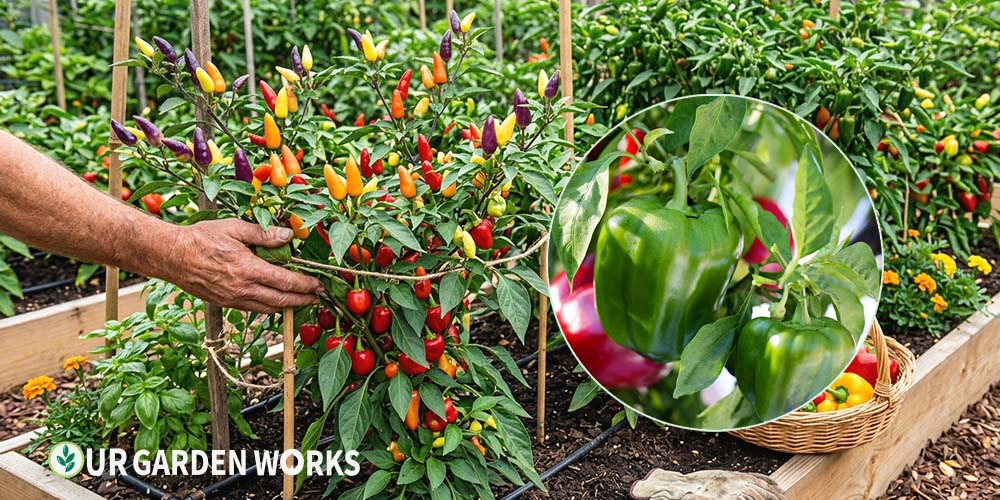
Peppers are one of the most versatile crops you can grow. One plant in a container can produce bell peppers all summer. A row of jalapeños will give you more heat than any salsa recipe calls for.
And if you want something in between, there are literally hundreds of varieties to explore — from sweet Italian frying peppers to habaneros that’ll make your eyes water.
The good news: peppers are not difficult. They want what tomatoes want — warm temperatures, full sun, and consistent water — which means if you can grow tomatoes, you can grow peppers. The main mistakes are planting too early into cold soil and over-watering once established. We’ll make sure you avoid both.
In this guide, you’ll learn how to grow peppers from seed or transplant through a full harvest — including the variety selection decision, soil and spacing requirements, fertilizing strategy, and the most common problems and exactly how to fix them.
Quick Answer: Peppers need 8+ hours of full sun, well-draining soil at pH 6.0–6.8, and soil temperatures above 65°F before transplanting. They’re slower to establish than tomatoes — patience pays off. Most varieties produce in 60–90 days from transplanting.
Choosing Your Pepper Variety
The pepper world divides into two broad camps: sweet and hot. Within each, you have wildly different options. Here’s how to think about it.
| Type | Best Varieties | Days to Harvest | Best For |
|---|---|---|---|
| Bell peppers | California Wonder, King of the North, Yolo Wonder | 70–80 days | Fresh eating, stuffing |
| Sweet frying peppers | Jimmy Nardello, Shishito, Padron | 60–75 days | Roasting, stir-fry |
| Mild heat | Anaheim, Poblano, Cubanelle | 70–80 days | Cooking, chiles rellenos |
| Medium heat | Jalapeño, Serrano, Cayenne | 65–80 days | Salsa, hot sauce, pickling |
| Hot peppers | Habanero, Thai Hot, Tabasco | 80–100 days | Hot sauce, spice cooking |
| Short season | Lipstick, Mohawk, Early Sunsation | 55–65 days | Zones 3–5 with short summers |
💡 Start with one sweet, one hot
If you’ve never grown peppers before, plant one bell or sweet frying pepper and one jalapeño. These two cover the most common kitchen uses, and both are forgiving and productive in most climates. Once you know how peppers behave in your garden, branch out into the more unusual varieties.
Pepper Growing Requirements
🌶️ Pepper Growing Requirements at a Glance
- Sunlight: Full sun — 8+ hours. Fewer hours = fewer peppers.
- Soil pH: 6.0–6.8. Same as tomatoes.
- Soil temperature to transplant: 65°F minimum. Peppers are even more sensitive to cold soil than tomatoes.
- Night temperature: Above 55°F for flower set. Below 55°F or above 95°F causes flower drop.
- Watering: 1–2 inches per week when young; peppers tolerate slight drought once established — in fact they produce hotter fruit when mildly water-stressed.
- Spacing: 18–24 inches between plants; rows 24–30 inches apart.
How to Grow Peppers: Step by Step
Step 1 — Start Seeds Indoors (8–10 Weeks Before Last Frost)
Peppers need a longer indoor head start than tomatoes — 8 to 10 weeks before your last frost date. Their germination is also slower and more temperature-dependent. Don’t rush this step.
Materials
- Pepper seeds, seedling trays, seed-starting mix
- Heat mat (not optional for peppers — they need 80–85°F soil to germinate well)
- Grow light or bright south window
Directions
- Sow seeds ¼ inch deep in damp seed-starting mix, 2 per cell.
- Place on a heat mat set to 80–85°F. Pepper seeds germinate poorly below 75°F and may take 3+ weeks without bottom heat.
- Cover with dome to hold humidity. Don’t water again until you see germination — overwatering pepper seeds before emergence causes damping off.
- Expect germination in 7–14 days with heat mat, up to 21 days without.
- Move to bright light the moment the first seedling emerges. Keep the grow light 2–3 inches above the tops of the seedlings.
- Thin to one seedling per cell when first true leaves appear.
Step 2 — Transplant Outdoors (When Soil Hits 65°F)
Peppers planted in cold soil simply sit — they don’t establish, they don’t grow, and they become increasingly susceptible to disease. Wait until your soil thermometer reads 65°F at 4 inches before transplanting. This is typically 2–3 weeks after your tomato planting date.
Directions
- Harden off seedlings for 7–10 days (same process as tomatoes — see our tomato growing guide for the full schedule).
- Dig holes 18–24 inches apart, 2–3 inches deeper than the root ball. Unlike tomatoes, don’t bury the stem — plant at soil level or just slightly deeper.
- Work compost into each planting hole. Add a pinch of slow-release fertilizer at the bottom.
- Set the transplant in, backfill, and firm gently.
- Water deeply immediately after planting.
- Apply 2–3 inches of mulch, keeping it away from the stem.
Step 3 — Watering and Fertilizing Through the Season
Watering: Water deeply once or twice a week. Unlike tomatoes, peppers are slightly drought-tolerant once established — and mild water stress during fruit development actually concentrates heat compounds in hot varieties, making them hotter. Don’t purposely stress sweet peppers.
Fertilizing: At planting, use a balanced 10-10-10. Once flowers open, switch to low-nitrogen fertilizer (5-10-10). Too much nitrogen at flowering = lush leaves, few peppers. This is the most common pepper fertilizing mistake.
Step 4 — Supporting Pepper Plants
Most sweet pepper varieties need light staking — the fruit gets heavy and can snap branches. Drive a single stake 18 inches into the ground at planting and tie the main stem loosely as it grows. Hot pepper varieties are usually compact enough to stand without support.
Common Pepper Problems and Fixes
- Flower drop: Temperature out of range (below 55°F or above 95°F at night). Wait for right conditions — flowers will return.
- Leaves curling inward: Usually underwatering or heat stress. Water deeply and add mulch.
- Blossom end rot: Same cause as in tomatoes — inconsistent watering and calcium uptake failure. Fix watering first.
- Pale yellowing leaves: Nitrogen deficiency. Feed with balanced fertilizer.
- Aphids on new growth: Spray directly with insecticidal soap. See our insecticidal soap vs neem oil guide for the right product choice.
When to Harvest Peppers
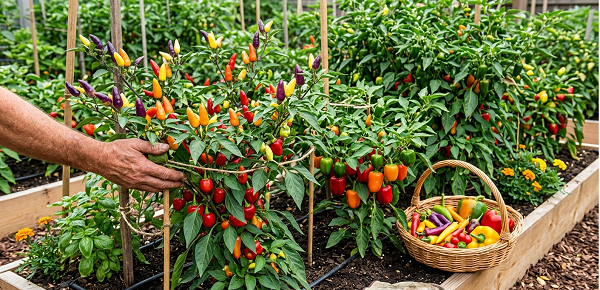
Here’s what most gardeners don’t know: all peppers start green. The color they’re “supposed to be” — red, yellow, orange, purple — is just a fully ripened green pepper. A green bell pepper left on the plant long enough becomes a red bell pepper. Same pepper, more time, sweeter flavor, higher nutrition.
- Green stage: Pick when the pepper is full-sized and firm. Milder flavor, crisper texture.
- Full color: Wait 2–3 more weeks. Sweeter, more nutritious, and more complex flavor. Worth the wait for sweet varieties.
- Hot peppers: Pick at green for milder heat, red/orange for maximum heat.
Use scissors or pruning shears to cut the stem above the cap — don’t pull, which can break the whole branch.
Frequently Asked Questions
Do peppers need support like tomatoes?
Most sweet peppers benefit from light staking because the fruit weight can snap branches. Hot peppers and compact varieties usually stand without support. A single short stake with soft ties is sufficient for most varieties.
Why are my pepper plants not producing flowers?
The most common causes are: too much nitrogen (push leaves instead of fruit), temperatures out of range (below 55°F or above 95°F at night), not enough sunlight, or peppers that haven’t yet reached maturity. Check temperature and fertilizer first.
Can I grow peppers in pots?
Yes — peppers are excellent container crops. Use a 5-gallon pot minimum for compact hot varieties, and a 10-gallon pot for larger bell pepper plants. They need daily watering in summer and bi-weekly feeding with a balanced fertilizer.
How do I make jalapeños hotter?
Mild water stress during the final weeks before harvest concentrates capsaicin in the fruit. Let the soil get slightly — not completely — dry between waterings in August. Also, red jalapeños (fully ripened) are always hotter than green ones from the same plant.
🥬 Related Articles in Our Vegetable Gardening Guide
Final Thoughts
We hope this guide gives you everything you need to grow a great pepper crop this season. Peppers are one of the most satisfying vegetable garden crops — they’re ornamental, productive, and useful in the kitchen in more ways than almost any other vegetable.
For the full lineup of our vegetable growing guides, our vegetable gardening guide is where to find them all.
Share this post with a fellow gardener who’s ready to get growing — and let us know in the comments which pepper varieties you’re trying this year. Happy growing!
