

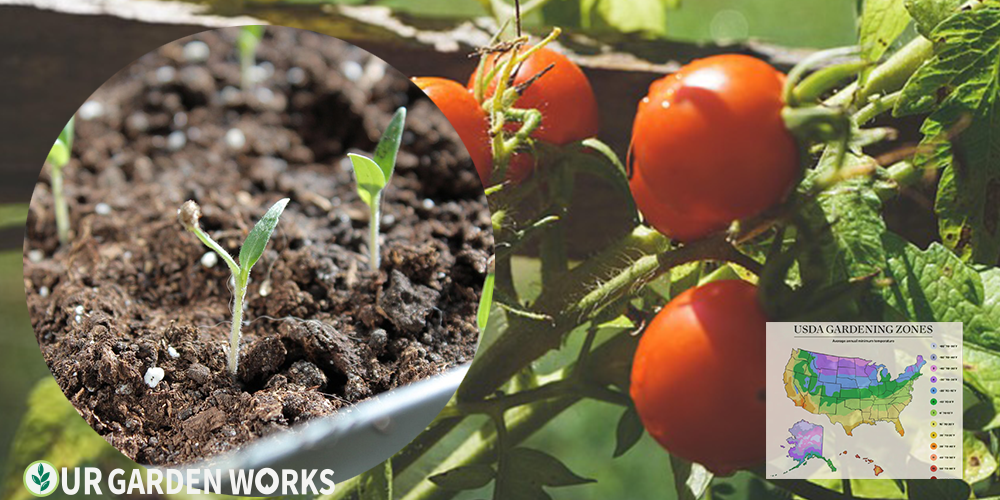
Timing is everything with tomatoes. You can do everything else right — perfect soil, the ideal fertilizer, proper staking — and still lose weeks of growing season because you planted too early or too late.
Planting too early is the more common mistake. The instinct to get tomatoes in the ground as soon as the days feel warm is almost universal among gardeners.
But tomatoes don’t care what the air temperature is. They care about soil temperature and nighttime lows — and when either is off, the plant simply sits there, chilling in the ground, doing nothing for weeks while you watch and wait.
In this guide, we’ll break down exactly when to plant tomatoes in your region — with a zone-by-zone schedule, soil temperature targets, and the signs that tell you it’s truly time to transplant. Whether you’re in a short-season climate or a year-round growing zone, this guide has your planting window.
Quick Answer: Plant tomatoes outdoors when soil temperature reaches 60°F at 4 inches deep, nighttime temperatures consistently stay above 50°F, and all frost risk has passed. This is typically 2 weeks after your average last frost date. For most of the US, that’s April–June depending on your region.
(You could use the table of contents on the right sidebar to jump to the section that applies to your growing zone.)
Why Tomato Planting Timing Matters So Much
Here is what actually happens when you plant tomatoes into cold soil: the roots stop absorbing water and nutrients. The plant can’t take up phosphorus below 55°F regardless of how much you’ve added to your soil. Leaves may turn purple. Growth stalls. You essentially waste 2–4 weeks of spring watching your tomato plant sulk.
Worse, cold-shocked transplants are significantly more susceptible to soil-borne diseases and fungal issues — problems that will follow the plant through the entire season even after the weather warms.
On the other hand, you genuinely lose nothing by waiting until conditions are right. A tomato planted on the correct date into warm soil will outgrow one planted 3 weeks early into cold soil within 10 days of going in the ground. The wait is worth it every time.
The Two Numbers You Need
Before you check any regional schedule, find out these two numbers for your specific location:
- Your average last frost date: Search “last frost date [your city]” or use our OGW frost date lookup tool. This is your starting reference point.
- Your soil temperature: A soil thermometer ($10–12 at any garden center) is the most useful tool you own in spring. Check the temperature at 4 inches deep in the morning — that’s your actual planting indicator.
🌡️ The soil temperature rule
60°F at 4 inches deep = safe to plant. 65°F = ideal. Below 55°F = wait. If you only have one number, use this one.
When to Start Seeds Indoors vs. When to Transplant Outside
These are two completely different dates that many new gardeners confuse. Get them mixed up and you’ll either have seedlings sitting in tiny pots for too long (root-bound, leggy) or you’ll transplant outdoors before conditions are right.
| Stage | Timing | What You’re Waiting For |
|---|---|---|
| Start seeds indoors | 6–8 weeks before last frost | Warm indoor temperatures (70–80°F) for germination |
| Pot up seedlings | ~4 weeks before transplant | 2 sets of true leaves, 3–4 inches tall |
| Begin hardening off | 7–10 days before transplant | Mild outdoor days, no frost forecast |
| Transplant outdoors | 2 weeks after last frost date | Soil 60°F+, nights above 50°F consistently |
Regional Tomato Planting Schedule — Zone by Zone
Use our USDA Plant Hardiness Zone Finder to find your zone if you’re not sure. The schedule below gives you the typical window for both seed-starting and outdoor transplanting in each region.
USDA Zones 9–11 — Deep South, Southwest, Southern California, Hawaii
Examples: Miami, Phoenix, Los Angeles, New Orleans, San Diego, Honolulu
| Action | Timing |
|---|---|
| Start seeds indoors (spring crop) | Late December – January |
| Transplant outdoors (spring crop) | Late January – March |
| Start seeds indoors (fall crop) | Late June – July |
| Transplant outdoors (fall crop) | August – September |
In Zones 9–11, you’ll often grow two tomato crops per year — a spring crop and a fall crop — because summers can be too hot for good fruit set. Temperatures above 95°F cause flower drop, so timing your planting to avoid the peak of summer is as important as avoiding frost. In these zones, the challenge isn’t cold — it’s heat.
💡 Zone 9–11 tip
Choose heat-tolerant varieties for spring planting — Celebrity, Heatmaster, and Sweet 100 cherry tomatoes handle high temperatures better than most heirlooms. Large heirlooms like Brandywine perform best in your fall crop when temperatures drop back to the ideal range.
USDA Zones 7–8 — Mid-Atlantic, Pacific Northwest, Pacific Coast, Pacific Northwest
Examples: Washington D.C., Nashville, Dallas, Atlanta, Portland OR, Seattle, Raleigh
| Action | Timing |
|---|---|
| Start seeds indoors | Late February – March |
| Last average frost date | March 15 – April 15 |
| Begin hardening off | Early to mid-April |
| Transplant outdoors | Late April – mid-May |
| First harvest | Late July – August |
Zone 7–8 gardeners have a generous window and can typically grow the widest range of varieties, including large heirlooms that need 80+ days. The Pacific Northwest (Zone 8) has a significant exception: cool cloudy summers mean tomatoes need a sheltered spot or a greenhouse tunnel for the best results with large fruiting varieties.
USDA Zones 5–6 — Midwest, Northeast, Mountain West
Examples: Chicago, Denver, New York, Boston, Philadelphia, Minneapolis, Kansas City
| Action | Timing |
|---|---|
| Start seeds indoors | Late March – early April |
| Last average frost date | April 15 – May 15 |
| Begin hardening off | Early to mid-May |
| Transplant outdoors | Mid-May – early June |
| First harvest | Late July – August |
This is the zone where impatience does the most damage. A warm week in April can make it feel like transplanting time, but soil temperatures in the Midwest and Northeast often stay below 55°F until late May.
Check your soil temperature before planting — not the air temperature, not the forecast, the actual soil at 4 inches deep.
⚡ Zone 5–6 pro tip — use Wall-O-Waters
Wall-O-Waters (or any season-extending water-filled plant protectors) let you transplant tomatoes 4–6 weeks earlier than your last frost date by creating a microclimate around the plant. Experienced Zone 5 gardeners routinely transplant in early April using these, while the soil is still cold. It’s one of the best investments in a short-season garden.
USDA Zones 3–4 — Northern States, Great Plains, High Elevation
Examples: Montana, North Dakota, Minnesota, Vermont, Alaska lowlands, high Colorado
| Action | Timing |
|---|---|
| Start seeds indoors | Mid to late April |
| Last average frost date | May 15 – June 15 |
| Begin hardening off | Late May – early June |
| Transplant outdoors | Early to mid-June |
| First harvest | August – early September |
In Zones 3–4, every day of growing season counts. Choose early-maturing varieties — Sub Arctic, Siletz, Stupice, or Early Girl — that produce in 55–65 days instead of the 80+ days that large heirlooms need. The short season means you may never get a full harvest from a slow-maturing Brandywine before frost hits.
Black plastic mulch is a genuine game-changer in these zones — it absorbs heat and warms soil faster than organic mulch, giving you an extra week or two of effective growing season.
Signs That It’s Actually Time to Plant
Beyond the calendar, here’s what to actually look for before you put tomatoes in the ground:
- Soil temperature is 60°F or above at 4 inches deep — the single most reliable indicator
- Nighttime lows are consistently above 50°F — check a 10-day forecast, not a single night
- No frost is forecast within the next 2 weeks — late frosts are more common than most gardeners expect
- Your seedlings have been hardened off for 7–10 days — they’ve been outside gradually and are ready for the transition
- The soil workable and draining well — soggy soil after snowmelt or heavy spring rain isn’t ready for planting regardless of temperature
Signs That It’s Too Early (Even If It Feels Like Spring)
- Soil feels cold when you push your hand 4 inches in
- Nights are still dropping to 45°F or below regularly
- Your hardening-off sessions showed wilting or leaf curl
- The 10-day forecast shows a frost possibility
- The soil is still waterlogged from spring rains
What Happens If You Plant Too Early or Too Late
Too Early
- Purple or yellow leaves from phosphorus lockout in cold soil
- No visible growth for 2–4 weeks (the plant is sulking, not establishing)
- Higher risk of soil-borne disease
- Flower drop if a cold night follows transplanting
- A plant transplanted 2 weeks later in warm soil will catch up within 10 days
Too Late
- Reduced total growing season — particularly relevant in Zones 3–6
- Large indeterminate varieties may not have enough days to produce before frost
- Less time to recover from pest or disease problems
🌱 The best mistake you can make
If you have to choose between slightly too early and slightly too late, choose slightly too late. Plants catch up. They don’t recover lost weeks from cold shock nearly as quickly.
Tips for Extending Your Tomato Season
Whether you’re working with a short season or just want earlier tomatoes, these tools and techniques genuinely extend your effective planting window:
- Season extenders (Wall-O-Waters, frost cloth, cloches): Let you plant 3–6 weeks earlier than your frost date
- Black plastic mulch: Warms soil 5–10°F faster than organic mulch — ideal in cold spring climates
- Raised beds: Drain and warm faster than in-ground beds, giving you an earlier effective soil temperature
- South-facing walls: Planting against a south-facing fence or wall creates a warmer microclimate — a classic technique in short-season gardens
- Early-maturing varieties: Choose varieties with 55–65 days to harvest if your season is short
Frequently Asked Questions
Can I plant tomatoes before the last frost date?
Yes — if you use season extenders like Wall-O-Waters or frost cloth that protect plants down to 20°F. Without protection, a frost will kill tomato transplants. With protection, many experienced gardeners plant 4–6 weeks before their last frost date.
What if I plant tomatoes in cold soil — will they die?
They won’t die immediately, but they’ll stall. Cold soil prevents root function and nutrient uptake. The plant will sit looking pale and purple for weeks until the soil warms. A plant put into warm soil 3 weeks later will catch up and often surpass the early-planted one.
Do I need a soil thermometer or can I just feel the soil?
A thermometer is worth the $10. “Feels cold” is subjective. Some gardeners have been planting into 50°F soil thinking it was fine for years and wondering why their plants take so long to establish. The thermometer removes the guesswork completely.
Can tomatoes survive a light frost after transplanting?
A light frost (28–32°F) will damage or kill tomato transplants. If a late frost is forecast after you’ve transplanted, cover plants with frost cloth, old bedsheets, or buckets overnight. Remove covers in the morning once temperatures rise above freezing.
🍅 More Tomato Growing Guides
Final Thoughts
We hope this regional guide has given you a clear picture of when to plant your tomatoes this season — and more importantly, why the timing matters as much as it does. Getting this single decision right sets up everything else: your soil prep, your seedling schedule, and your first harvest date.
For the complete guide to growing tomatoes from that first seed all the way to harvest day, our how to grow tomatoes guide covers every stage. And for all our tomato articles in one place, the vegetable gardening guide is where to find them.
Share this post with a fellow gardener who’s been eyeing their tomato seedlings, ready to plant a little too soon. And let us know in the comments — what zone are you in, and what’s your go-to tomato variety? Happy growing!

2 thoughts on “When to Plant Tomatoes — Regional Planting Guide (2026)”