

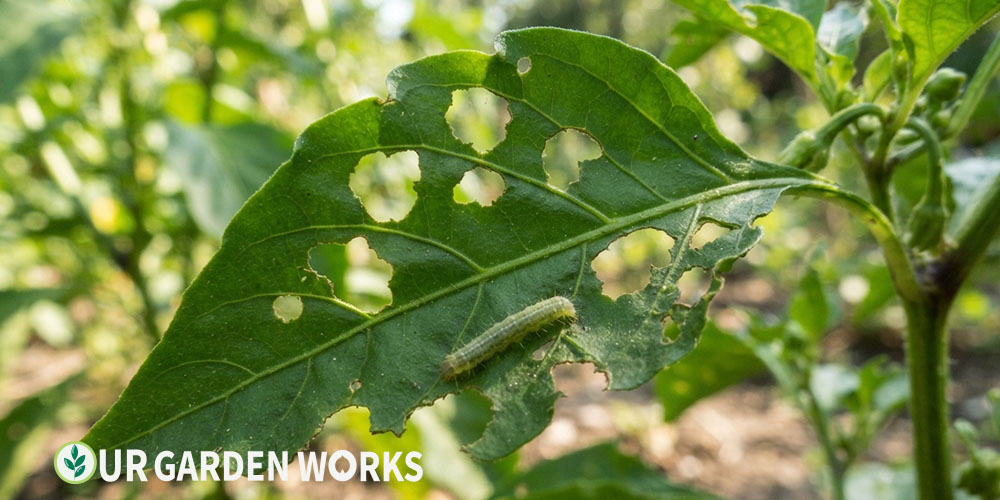
Holes in pepper leaves point to a smaller, more specific list of suspects than you might expect, since peppers attract a somewhat different set of pests than tomatoes or other garden vegetables. The hole shape, size, and where on the plant the damage concentrates all help narrow things down quickly.
We’ll walk through the four most likely causes in order of how often we see them in pepper patches, with the visual details that separate one from another.
Quick Answer: Holes in pepper leaves are most often caused by caterpillars (irregular holes, often with visible droppings nearby), flea beetles (numerous small “shot hole” perforations), slugs and snails (irregular holes with slime trails, worse after rain), or grasshoppers (large jagged chunks missing from leaf edges). Check hole size, edge texture, and time of day for activity to confirm which one you’re dealing with.
Cause 1 — Caterpillars
Several caterpillar species feed on pepper foliage, producing irregular holes of varying sizes that can appear anywhere on the leaf, not just the edges. Unlike some other pests, caterpillar damage often comes with a telltale sign: small, dark, pellet-shaped droppings on leaves or the soil beneath the plant.
How to confirm it’s caterpillars:
- Holes are irregular in shape and size, scattered across the leaf surface
- Small dark droppings visible on leaves or soil nearby
- Caterpillars themselves may be visible, often well camouflaged against the leaf color
- Damage tends to progress steadily as the caterpillar continues feeding
Fix: Hand-pick visible caterpillars and dispose of them. For larger populations, Bt (Bacillus thuringiensis) is an effective, organic-approved treatment that specifically targets caterpillars without harming beneficial insects or pollinators.
💡 Check the undersides of leaves at dusk
Many caterpillar species feed most actively in the evening and at night, then hide on leaf undersides or in soil during the day. If you’re seeing damage but can’t find the culprit during a daytime inspection, an evening check with a flashlight often reveals the caterpillar in the act.
Cause 2 — Flea Beetles
Flea beetles produce a very distinctive damage pattern: numerous tiny, round holes scattered across the leaf, often described as looking like the leaf has been hit with fine buckshot. The beetles themselves are small, dark, and jump quickly when disturbed, which is where the “flea” name comes from.
How to confirm it’s flea beetles:
- Holes are numerous, small, and roughly round — the “shot hole” pattern
- Tiny dark beetles, about 1/16 inch, jump away rapidly when you approach
- Damage often concentrates on young transplants more than established plants
- Most active in warm, sunny conditions
Fix: Row covers protect young transplants during the most vulnerable early period. For active infestations, insecticidal soap or a pyrethrin-based spray provides effective control, applied directly to affected foliage.
Cause 3 — Slugs and Snails
Slugs and snails produce irregular holes with smooth edges, distinguishable from insect chewing by the accompanying silvery slime trails left on the leaf surface and surrounding soil. Damage is typically worse after rain or in consistently moist, shaded garden conditions.
How to confirm it’s slugs or snails:
- Silvery slime trails visible on leaves or nearby soil
- Holes have relatively smooth edges compared to jagged insect chewing
- Damage worse after rain or in humid, shaded conditions
- Pests most active at night — check with a flashlight after dark
Fix: Beer traps, copper tape barriers, or iron phosphate slug bait all provide effective control. Reducing moisture and hiding spots near plants (mulch pulled back slightly, debris cleared) also reduces slug pressure over time.
Cause 4 — Grasshoppers
Grasshoppers cause more dramatic damage than the other causes here, often removing large, jagged chunks from leaf edges rather than producing discrete holes within the leaf surface. This damage tends to appear suddenly and can be severe during grasshopper population peaks in mid-to-late summer.
How to confirm it’s grasshoppers:
- Damage is large, jagged chunks missing from leaf margins, not interior holes
- Grasshoppers themselves are usually visible on or near the plant during the day
- Damage appears suddenly and can affect many plants in the garden simultaneously
- Most common during dry summer conditions and in late summer generally
Fix: Row covers offer the most reliable protection for smaller plantings. For larger gardens or severe pressure, a pyrethrin-based spray provides some control, though grasshoppers are notoriously mobile and difficult to fully eliminate from an outdoor garden.
Telling the Four Causes Apart at a Glance
| Cause | Hole Pattern | Key Clue | Most Active |
|---|---|---|---|
| Caterpillars | Irregular, scattered | Dark droppings nearby | Evening/night for many species |
| Flea beetles | Numerous tiny “shot holes” | Tiny beetles jump when approached | Daytime, warm weather |
| Slugs/snails | Irregular, smooth edges | Silvery slime trails | Nighttime, after rain |
| Grasshoppers | Large jagged edge chunks | Visible on plant, sudden damage | Daytime, dry summer |
Why Young Transplants Are Most Vulnerable
Several of the causes above, particularly flea beetles and slugs, disproportionately target young pepper transplants rather than established, mature plants.
Young plants have more tender tissue and a smaller overall leaf surface, which means the same amount of feeding damage represents a much larger percentage of the plant’s total foliage compared to a mature bush.
This is exactly why protective measures like row covers are most valuable during the first few weeks after transplanting, when plants are smallest and most vulnerable, and can often be removed once plants are established and better able to tolerate some pest pressure without serious consequence.
If you’ve struggled with transplant losses to pests in previous seasons, prioritizing protection during this specific early window addresses the highest-risk period directly.
Companion Planting as Prevention
Several companion plants can meaningfully reduce pest pressure on peppers before it ever turns into hole damage, working alongside rather than replacing the direct treatments covered above.
Marigolds planted near peppers help deter flea beetles through their strong scent, while also drawing in some beneficial predatory insects that prey on smaller pest species over the course of a season.
Dill and other flowering herbs allowed to bolt attract parasitic wasps and other beneficial insects that help control caterpillar populations naturally, reducing the need for direct intervention later in the season.
See our guide to companion plants for peppers for the full list of pairings that support pest management specifically, alongside other benefits like improved pollination and soil health.
While companion planting won’t eliminate pest pressure entirely on its own, building these plants into your garden layout from the start, rather than treating pest control purely as a reactive spray-and-hope approach, generally produces a more resilient pepper patch with fewer severe outbreaks over a full season.
When Hole Damage Crosses Into a Serious Problem
A handful of scattered holes on a vigorous, otherwise healthy pepper plant rarely threatens the plant’s overall productivity, since peppers can tolerate moderate leaf loss without significant impact on fruiting.
Widespread defoliation, however — losing a substantial portion of total leaf surface across the whole plant — does reduce the plant’s ability to photosynthesize and support fruit development, making more aggressive intervention worthwhile at that point.
Monitoring trend rather than reacting to every single hole is generally the right approach: check every few days to see whether damage is accelerating, staying steady, or actually slowing as natural predators or your interventions take effect.
This trend-based approach prevents both under-reacting to a genuinely escalating problem and over-treating a minor, self-limiting issue. Keeping a simple mental note, or even a quick photo taken every few days from the same angle, makes this kind of trend-tracking far easier than relying on memory alone across a busy gardening season.
Frequently Asked Questions
Will holes in pepper leaves affect the peppers themselves?
Generally not directly, since most of these pests target leaves rather than fruit. The main risk is indirect — significant leaf loss reduces the plant’s overall energy production, which can in turn reduce fruit size or yield if damage is severe and sustained rather than light and occasional.
Are the pests that cause holes in pepper leaves the same as those affecting my tomatoes?
There’s overlap — caterpillars and slugs commonly affect both crops — but flea beetles in particular show a stronger preference for peppers and other nightshades over some other garden vegetables. If you’re seeing similar damage on both tomatoes and peppers nearby, treating the affected area as a whole rather than plant by plant is usually more efficient.
How can I tell the difference between pest damage and disease causing holes?
True holes — where leaf tissue is physically missing — are almost always pest-related rather than disease-caused, since most pepper diseases produce spots, discoloration, or wilting rather than actual missing tissue.
If you’re seeing dead, brown tissue that hasn’t fully fallen away to create an open hole, that’s more likely disease-related and worth checking against our brown spots on pepper leaves guide instead.
Do organic and natural pest controls work as well as chemical pesticides for these pests?
For most home garden situations, yes — Bt for caterpillars, insecticidal soap for flea beetles, and iron phosphate bait for slugs all provide genuinely effective control without the broader ecological impact of synthetic, broad-spectrum pesticides.
The main tradeoff is that organic options sometimes require more consistent or frequent application and faster intervention once damage is spotted, compared to some longer-lasting synthetic alternatives.
Related Articles in Our Pepper Leaf Problems Guide
- Yellow Leaves on Pepper Plants — Why It Happens
- Holes in Pepper Leaves — Diagnosis Guide
- Brown Spots on Pepper Leaves — Causes and Fixes
- White Spots on Pepper Leaves – Identification Guide
- Why Are Pepper Leaves Curling? 6 Causes and How to Fix Each One
- How to Grow Peppers (Bell & Hot) — Complete Guide
- 6 Best Companion Plants for Peppers – Full List (2026)
- Growing Peppers in Containers: Varieties, Pots & Fertilizing (2026)
Final Thoughts
We hope this guide has helped you match the hole pattern on your pepper plant to the actual culprit, since the right treatment really does depend on knowing which pest you’re dealing with. Most cases are manageable with a bit of monitoring and the right targeted approach.
For all our pepper and vegetable growing guides, our vegetable gardening guide links to everything.
Share this post with a fellow gardener who’s troubleshooting their pepper plants — and let us know in the comments which pest turned out to be the culprit. Happy growing!
