

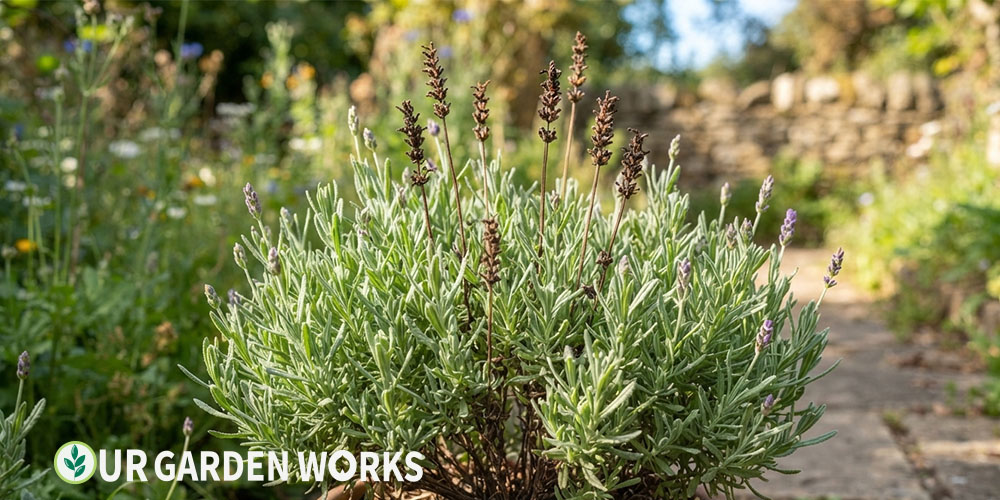
Brown tips on lavender catch a lot of gardeners off guard, mainly because lavender has such a strong reputation for being tough and drought-tolerant that the instinct is almost never to suspect overwatering. And yet that’s exactly where most cases of lavender browning actually originate.
We’ll walk through the real causes in order of likelihood, since understanding lavender’s specific needs — which differ in some important ways from typical garden plants — makes this diagnosis much more intuitive once you see the pattern.
Quick Answer: Brown tips on lavender are most often caused by overwatering or poor drainage (the most common cause, despite lavender’s drought-tolerant reputation), root rot from prolonged soil moisture, winter dieback in cold climates, or simple old woody growth that naturally browns over time. Check soil drainage and recent watering habits first, since this single factor explains the majority of cases.
Cause 1 — Overwatering and Poor Drainage (Most Common)
This is the cause that surprises people most, precisely because lavender’s drought-tolerant reputation makes overwatering feel like an unlikely explanation.
Lavender evolved in rocky, fast-draining Mediterranean soil, and it genuinely prefers staying on the drier side — consistently moist or poorly draining soil stresses the plant in a way that shows up as browning, particularly at stem tips and on lower growth.
How to confirm it’s overwatering or poor drainage:
- Soil feels consistently moist or you’re watering on a frequent schedule meant for typical garden plants
- Planting site has heavy clay soil or otherwise poor drainage
- Browning often starts at lower, older growth and stem tips
- Plant may also show a generally weak, leggy, or sparse appearance
Fix: Reduce watering frequency dramatically — established lavender often needs no supplemental water at all beyond rainfall in many climates, once roots are settled. If drainage is the core problem, amending soil with coarse sand or grit, or relocating to a raised, well-draining spot, addresses the issue more permanently than just adjusting watering habits.
💡 Lavender wants less water than almost anything else in your garden
If lavender is planted alongside typical garden perennials or vegetables that need regular watering, it’s very easy to accidentally overwater it simply by treating it the same as its neighbors.
Planting lavender in its own dedicated area with other drought-tolerant, Mediterranean-style plants prevents this mismatch entirely.
Cause 2 — Root Rot
Prolonged waterlogged conditions can progress beyond simple stress into actual root rot, where the root system itself begins to die back, unable to support the plant’s water and nutrient needs regardless of how dry the air or upper soil might feel. This is a more advanced, serious version of the overwatering problem above.
How to confirm it’s root rot:
- Browning continues or worsens even after you’ve reduced watering
- Stems near the soil line may feel soft, darkened, or mushy
- Plant shows an overall decline beyond just tip browning
- History of consistently wet or poorly draining soil
Fix: Carefully check roots by gently lifting the plant — healthy lavender roots are firm and pale, while rotted roots are dark, soft, and mushy. Trim away affected roots and replant in well-draining soil or a raised bed. Severely rotted plants may not be salvageable and are often better replaced.
Cause 3 — Winter Dieback
In colder climates, lavender — particularly English lavender varieties, which are hardier than French or Spanish types but still vulnerable to severe cold — can experience winter dieback where stem tips and sometimes larger sections brown and die from cold exposure or winter moisture combined with freezing temperatures. This typically becomes visible as new growth emerges in spring.
How to confirm it’s winter dieback:
- Browning is noticed in early spring as the plant begins waking from dormancy
- Affects stem tips and sometimes larger branch sections, often unevenly across the plant
- Plant is a variety with marginal cold hardiness for your zone
- Followed a particularly harsh or wet winter
Fix: Prune away dead, browned growth once you can clearly see the line between dead and living tissue, typically once new growth has begun emerging. Choose more cold-hardy varieties for future plantings if winter dieback is a recurring issue, and ensure good drainage going into winter, since wet soil combined with freezing temperatures is more damaging than cold alone.
Cause 4 — Natural Woody Growth Aging
Lavender plants become increasingly woody at their base as they age, and it’s normal for some of the oldest, most established stems to brown and die back naturally over several years, even with ideal care. This is simply part of the plant’s natural growth habit rather than a sign of a problem.
How to confirm it’s natural aging:
- Affects only the oldest, most established stems on a multi-year-old plant
- Rest of the plant shows vigorous new growth
- No other signs of overwatering, root rot, or winter damage
Fix: None needed, though regular pruning (lavender benefits from an annual trim after flowering) helps manage this natural woodiness and encourages fuller, more compact growth over the plant’s lifespan.
Telling the Four Causes Apart at a Glance
| Cause | Timing | Pattern | Soil Condition |
|---|---|---|---|
| Overwatering/drainage | Any time | Lower growth, general decline | Consistently moist |
| Root rot | Any time, progressive | Worsens despite reduced watering | History of waterlogging |
| Winter dieback | Visible in spring | Stem tips, uneven | Variable, often wet winter |
| Natural aging | Gradual, multi-year | Oldest stems only | Normal, healthy |
Does Lavender Variety Affect Susceptibility?
The lavender variety you’re growing meaningfully changes both cold hardiness and overall resilience to the causes covered above, which is worth knowing if brown tips have been a recurring frustration.
English lavender (Lavandula angustifolia) is the hardiest commonly available type, tolerating winter conditions down to roughly Zone 5 in many cultivars, making it the more forgiving choice for colder climates where winter dieback is a real concern.
French and Spanish lavender varieties (Lavandula dentata and Lavandula stoechas) offer beautiful, often more dramatic flower forms, but generally tolerate far less cold than English types, sometimes struggling even in Zone 7 winters without protection.
If you garden in a marginal climate and have struggled repeatedly with winter dieback specifically, switching to a hardier English lavender cultivar addresses the problem at its root rather than continuing to manage damage every spring.
All lavender varieties share the same fundamental drainage and watering preferences regardless of cold hardiness differences, so the overwatering and root rot causes apply equally across English, French, and Spanish types.
Variety selection mainly changes your risk profile for the winter dieback cause specifically, not the watering-related causes that explain the majority of cases overall.
Soil Amendment for Existing Plantings
If you already have lavender established in a spot with less-than-ideal drainage and relocating isn’t practical, soil amendment around the existing plant can meaningfully improve conditions without a full replant.
Working coarse sand, fine gravel, or perlite into the soil surrounding the root zone, without disturbing the roots themselves too aggressively, gradually improves drainage over a season or two as the amended soil integrates with the surrounding native soil.
Raising the soil level slightly around the base of the plant, creating a subtle mound rather than a flat or depressed planting area, also helps shed excess water away from the crown and root zone during heavy rain.
This is a lower-effort intervention than full relocation and often provides enough improvement to resolve mild to moderate overwatering-related browning without needing to dig up and move an established plant.
Choosing the Right Planting Site From the Start
Since drainage-related issues explain the majority of lavender browning cases, getting the planting site right at the outset prevents far more trouble than trying to manage symptoms after the fact in an unsuitable spot.
Lavender wants full sun, excellent drainage, and soil on the leaner, less fertile side — conditions that are almost the opposite of what most vegetable garden beds are optimized for.
Raised beds, mounded planting areas, or naturally sloped, well-draining spots all suit lavender better than flat ground with rich, regularly irrigated soil.
If you’re working with heavy clay or a low-lying area prone to collecting water, amending generously with coarse sand and grit, or simply choosing a different location for lavender specifically, saves considerable frustration compared to fighting persistent drainage problems in an unsuitable spot.
Frequently Asked Questions
How often should I actually water established lavender?
Established, in-ground lavender in most climates needs little to no supplemental watering beyond normal rainfall, especially after its first full growing season once roots are settled.
Newly planted lavender needs more regular watering during its first few months to establish, but should be transitioned to minimal supplemental watering as it matures.
Can I prune away brown tips to make my lavender look better right away?
Yes, trimming visibly dead, brown growth is a reasonable cosmetic step and won’t harm the plant, as long as you’re cutting into clearly dead tissue rather than healthy living stems.
Wait until you can see a clear line between dead brown growth and living green or silvery tissue before pruning, particularly for winter dieback, since cutting too early in spring risks removing wood that would have recovered.
Is container-grown lavender more prone to brown tips than in-ground lavender?
It can be, mainly because container soil retains moisture differently than in-ground soil and it’s easier to accidentally overwater a container plant that’s being checked and watered on a routine schedule.
Choose a container with excellent drainage holes, use a well-draining potting mix amended with extra perlite or grit, and water only when the soil has dried out significantly, rather than on a fixed calendar schedule.
Related Articles in Our Herb Garden Guide
Final Thoughts
We hope this guide has shifted your thinking on lavender’s water needs, since “less is more” really is the operating principle for this particular plant. Getting the planting site and watering rhythm right from the start prevents most of the trouble covered here.
For more herb garden guidance, our full collection of herb care articles on vegetable guide page covers everything from planting to seasonal pruning.
Share this post with a fellow gardener who’s troubleshooting their lavender — and let us know in the comments which cause matched what you found. Happy growing!
