

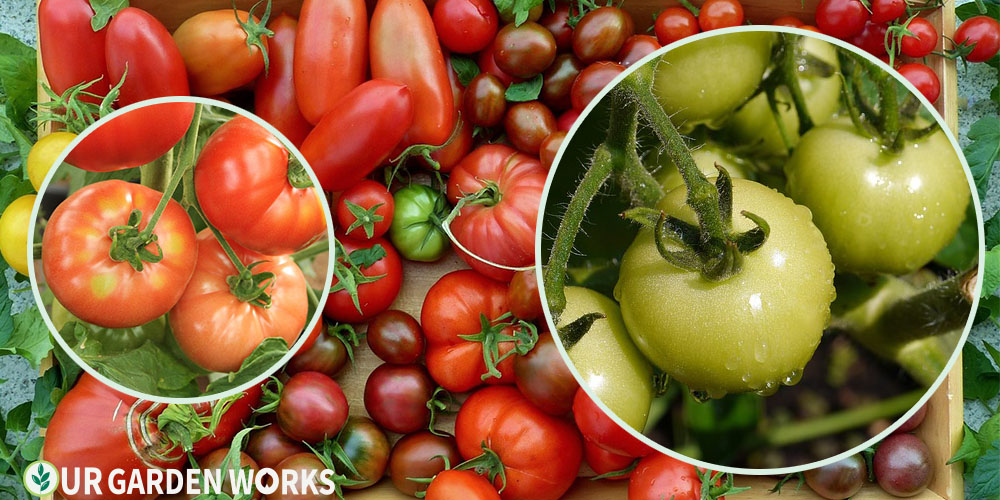
Walk into any decent garden center in spring and you’ll be confronted with dozens of tomato varieties, all with tantalizing names and beautiful photos on their labels. Cherokee Purple. Sungold. Celebrity. San Marzano. Mortgage Lifter. Yellow Pear. Black Krim. How do you choose?
The honest answer is that the variety you choose matters — a lot. Plant the wrong tomato for your climate, your use, or your space, and you’ll fight the plant all season. Plant the right one and it will practically grow itself.
In this guide, we’ll walk you through every major tomato type — determinate vs indeterminate, heirloom vs hybrid, cherry vs slicer vs paste — and give you our specific recommendations for each category.
By the end, you’ll know exactly which varieties to grow for your particular garden, goals, and climate.
Quick Answer: Tomatoes are divided into two growth habits (determinate and indeterminate) and several use categories (cherry, slicing, paste/Roma, beefsteak, and heirloom). The best variety for your garden depends on three things: your climate and season length, your intended use (fresh eating vs sauce), and your available space.
(You could use the table of contents on the right sidebar to jump to the type most relevant to your garden.)
First: Understand Growth Habit (This Changes Everything)
Before you look at a single variety name, you need to understand the difference between determinate and indeterminate tomatoes. This is the most fundamental distinction in the tomato world — it affects spacing, staking, pruning, harvest timing, and which varieties work in your growing situation.
Determinate Tomatoes — Bush Types
Determinate tomatoes grow to a genetically fixed size — typically 3–5 feet — set all their fruit within a 2–4 week window, and then stop producing. The whole plant matures and fruits at roughly the same time, then declines.
They’re ideal for:
- Canning and sauce making (you get a large harvest at once, perfect for processing)
- Container growing (compact, controllable size)
- Short-season climates (all fruit matures before frost)
- Gardeners who don’t want to prune suckers constantly
- Small gardens where space is tight
The trade-off: once the harvest window passes, that’s it for the season. You don’t get a continuous supply of fresh tomatoes from determinate plants.
Indeterminate Tomatoes — Vining Types
Indeterminate tomatoes keep growing and producing until the first frost kills them. They can reach 6–12 feet tall and produce fruit continuously throughout the season. They need tall, sturdy support and benefit significantly from regular sucker pruning.
They’re ideal for:
- Fresh eating throughout the season (continuous supply)
- Gardeners who want the best-tasting tomatoes (most heirlooms are indeterminate)
- Longer growing seasons (Zones 6–11)
- Gardeners willing to stake, cage, and prune regularly
The trade-off: they need significant space, sturdy support, and more maintenance. And in short-season climates, the late-ripening fruit may not finish before frost.
💡 Which should you choose?
If you’re in Zones 3–5 or growing primarily for sauce: lean toward determinate varieties. If you’re in Zones 6–11 and want fresh tomatoes all summer: lean toward indeterminate. Most experienced gardeners grow both — determinates for sauce and indeterminates for fresh eating.
Heirloom vs Hybrid — The Great Debate
This is the question we get asked most often, and the answer isn’t as simple as either camp makes it sound.
Heirloom Tomatoes
Heirlooms are open-pollinated varieties that have been grown and seed-saved for at least 50 years (some definitions require longer). Their defining characteristics:
- Flavor: Often (not always) superior to modern hybrids — complex, sweet-acid balance, rich tomato taste
- Diversity: Colors, shapes, and sizes that hybrids don’t offer — purple-black, striped, yellow, white, deep red
- Seed saving: You can save seeds and replant them true to type every year
- Disease resistance: Generally lower than modern hybrids — more susceptible to blight, bacterial wilt, and other issues
- Yield: Often lower and less consistent than hybrids
Hybrid Tomatoes
Hybrids are crosses between two parent lines, bred for specific traits — disease resistance, uniformity, yield, shelf life. Their characteristics:
- Disease resistance: Most hybrids carry significant resistance to multiple diseases (you’ll see initials like V, F, N, T on the label — each represents resistance to a specific pathogen)
- Yield: Generally higher and more consistent than heirlooms
- Crack resistance: Bred for it in most modern varieties
- Flavor: Improving significantly — modern hybrids like Sungold and Sweet 100 challenge any heirloom for flavor
- Seed saving: Seeds won’t breed true — you need to buy new seeds each year
💡 Our honest take
Grow heirlooms for the experience and the flavor diversity — they’re one of the joys of home gardening. But grow at least one disease-resistant hybrid alongside them as insurance. In a bad blight year, you’ll be grateful for it.
The Best Tomato Varieties by Category
Cherry Tomatoes
Cherry tomatoes are the most productive and arguably the most forgiving type for home gardeners. One well-tended indeterminate cherry tomato plant can produce 10–20 lbs of fruit in a season — enough to eat daily and still have extra. Most are indeterminate and need staking, but their disease tolerance and continuous production make them the easiest tomatoes to grow well.
Indeterminate – Hybrid
Sungold
Days to harvest: 57 days | Size: 1 inch | Color: Orange
The single most beloved cherry tomato among experienced home gardeners, and for good reason. Sungold produces extraordinary quantities of sweet, almost fruity orange cherry tomatoes from midsummer until frost. The flavor is often described as tropical — distinctly sweeter and more complex than any red cherry tomato. It’s a hybrid, so you can’t save seeds, but it’s worth buying fresh every year.
Indeterminate – Hybrid
Sweet 100
Days to harvest: 65 days | Size: 1 inch | Color: Red
The classic red cherry tomato for home gardens — prolific, disease resistant, and consistently sweet. Sweet 100 produces long clusters of fruit and is one of the most reliable performers across a wide range of climates and conditions. If you want one dependable cherry tomato that works in almost any garden, this is it.
Indeterminate – Heirloom
Black Cherry
Days to harvest: 64 days | Size: 1 inch | Color: Dark red-purple
An heirloom cherry tomato with a rich, complex flavor profile — earthier and more savory than the sweet modern cherry varieties. Beautiful deep mahogany color makes it a standout in salads. Moderately productive and worth growing if you want flavor depth rather than maximum yield.
Determinate – Heirloom
Yellow Pear
Days to harvest: 78 days | Size: 1–2 inches | Color: Yellow
A sweet, mild, pear-shaped heirloom cherry tomato that kids love eating straight from the plant. Less productive than modern hybrids but brings color and whimsy to the garden. Great for container growing due to its manageable size.
Slicing Tomatoes — For Fresh Eating
Slicing tomatoes are the classic garden tomato — medium to large, round or slightly flattened, meant to be sliced and eaten fresh on sandwiches, in salads, or simply with salt. Most are indeterminate and need staking.
Indeterminate – Hybrid
Celebrity
Days to harvest: 70 days | Size: 7–8 oz | Color: Red
The most widely recommended slicer for home gardeners, and it earns the reputation. Celebrity carries resistance to Verticillium wilt, Fusarium wilt races 1 and 2, nematodes, and tobacco mosaic virus — that’s about as comprehensive disease resistance as you can get in a single variety. It produces reliably in a wide range of conditions, from humid Southeast gardens to dry Western climates. Flavor is solid if not spectacular. If you want one slicer that won’t let you down, Celebrity is it.
Indeterminate – Hybrid
Early Girl
Days to harvest: 52–57 days | Size: 4–6 oz | Color: Red
The go-to early-season slicer, particularly valuable in short-season climates. Early Girl produces medium-sized, flavorful red tomatoes faster than almost any other slicer — you can have ripe tomatoes weeks before your neighbors. A reliable producer that keeps fruiting continuously through the season. The new Early Girl Improved offers better disease resistance than the original.
Indeterminate – Heirloom
Cherokee Purple
Days to harvest: 80 days | Size: 10–12 oz | Color: Deep purple-red
One of the most beloved heirloom tomatoes for flavor — rich, complex, with a smoky-sweet taste that hybrid slicers rarely match. The deep purple-red color with green shoulders is striking. Cherokee Purple is more susceptible to blight and cracking than hybrids, and it takes longer to produce. Grow it for the experience and flavor, not for reliability.
Indeterminate – Heirloom
Brandywine
Days to harvest: 80–100 days | Size: 1–2 lbs | Color: Pink-red
The legendary heirloom slicer — frequently cited as one of the best-tasting tomatoes in the world, with a rich, sweet, complex flavor. Brandywine produces very large fruit (often over a pound each) that are beautiful when sliced. The significant trade-offs: it takes 80–100 days to mature, is highly susceptible to blight and cracking, and produces less than modern hybrids. Grow it as your “special” tomato alongside more reliable producers.
Beefsteak Tomatoes
Beefsteak is a size category as much as a type — tomatoes over 8 oz with meaty flesh, few seed cavities, and the large slices that define a tomato sandwich. Most are indeterminate and slow-maturing.
Indeterminate – Hybrid
Big Boy / Better Boy
Days to harvest: 70–75 days | Size: 1 lb+ | Color: Red
The classic large red beefsteak for home gardeners. Better Boy improved on Big Boy with Verticillium and Fusarium resistance. Both produce reliably large, meaty tomatoes with good flavor. Better Boy in particular is one of the most consistent large-fruiting tomatoes available for home gardens, with broad disease resistance and adaptability across many climates.
Indeterminate – Heirloom
Mortgage Lifter
Days to harvest: 80 days | Size: 1–2 lbs | Color: Pink-red
One of the great American tomato stories — developed by a West Virginia radiator repairman named Radiator Charlie in the 1930s, who sold plants for $1 each and paid off his mortgage. Mortgage Lifter produces enormous, meaty, mild-sweet pink tomatoes with almost no cracking for an heirloom. It’s more reliable than many heirlooms while delivering the flavor and size heirloom fans love.
Paste and Roma Tomatoes — For Sauce and Canning
Paste tomatoes have dense, meaty flesh, fewer seeds, and lower water content than slicing tomatoes — which means more flavor per pound and less cooking time to reduce sauce. If you’re making sauce, salsa, or canning tomatoes, this is the type you want.
Determinate – Heirloom
Roma VF
Days to harvest: 75 days | Size: 2–3 oz | Color: Red
The standard paste tomato for home gardens — determinate, disease resistant, and highly productive. Roma VF produces dense clusters of plum-shaped fruits with meaty flesh and low seed count. All the fruit matures within a 2–3 week window, which is ideal for canning sessions. The flavor is mild and slightly tangy — excellent for sauce. This is the most widely grown paste tomato in North America for good
Indeterminate – Heirloom
San Marzano
Days to harvest: 78–80 days | Size: 3–5 oz | Color: Red
The Italian paste tomato used in traditional Neapolitan pizza sauce — thin walls, dense flesh, intense sweet-acid flavor, and very low seed count. San Marzano has protected designation of origin status in Italy, but you can grow similar varieties at home. True San Marzano heirloom seeds produce elongated, pointed tomatoes with exceptional flavor. The trade-off: it’s indeterminate, so it needs staking and produces continuously rather than all at once. For the best sauce, it’s worth the extra effort.
Determinate – Hybrid
Amish Paste
Days to harvest: 83 days | Size: 6–8 oz | Color: Red
A large, oxheart-shaped paste tomato with exceptional flavor for a processing tomato — rich enough to eat fresh, dense enough for excellent sauce. Amish Paste is often recommended as the best-tasting paste tomato for home gardeners who want sauce-quality fruit with slicing-quality flavor. Produces large, meaty fruits with relatively few seeds and excellent yield.
Best Tomatoes for Specific Situations
| Your Situation | Best Varieties | Why |
|---|---|---|
| Short growing season (Zones 3–5) | Early Girl, Sub Arctic, Siletz, Stupice | Mature in 52–65 days; produce before first frost |
| Hot climate (Zones 9–11) | Heatmaster, Solar Fire, Celebrity, Sweet 100 | Set fruit above 95°F when others drop blossoms |
| Container growing | Patio, Tumbling Tom, Bush Early Girl, Yellow Pear | Compact determinates; manageable in 10–15 gal pots |
| Disease pressure (humid climate) | Celebrity, Mountain Fresh, Juliet, Defiant | Multiple disease resistances bred in |
| Best flavor (heirlooms) | Brandywine, Cherokee Purple, Black Krim, Mortgage Lifter | Complex flavor profiles not found in hybrids |
| Making sauce | Roma VF, San Marzano, Amish Paste | Dense, low-moisture flesh; high yield |
| Beginners | Celebrity, Sweet 100, Early Girl | Disease resistant, reliable, forgiving, productive |
| Kids in the garden | Sungold, Sweet 100, Yellow Pear, Tumbling Tom | Small, sweet, snackable; kids love picking them |
How to Choose Your Variety — A Decision Framework
🍅 Find Your Tomato in 3 Questions
Question 1: What’s your season length?
Short season (under 120 frost-free days) → Choose varieties under 70 days to maturity
Long season (120+ days) → Any variety works; heirlooms are worth trying
Question 2: What are you growing for?
Fresh eating → Cherry or slicer varieties (indeterminate for continuous supply)
Sauce and canning → Paste/Roma types (determinate for bulk harvest timing)
Both → Mix: 2–3 cherry + 2–3 slicers + 3–5 paste tomatoes
Question 3: How much maintenance can you do?
Low maintenance → Determinate varieties; no sucker pruning needed
Regular care available → Indeterminate varieties; more productive with proper pruning and staking
Tips and Reminders for Choosing Tomato Varieties
- Decode the disease resistance codes on hybrid labels: V = Verticillium wilt, F = Fusarium wilt, N = nematodes, T = tobacco mosaic virus, A = Alternaria. The more letters, the broader the protection. In areas with high disease pressure, look for at least VF on your label.
- Buy from seed, not transplants, for the best variety selection: Your local garden center carries 8–12 varieties. Seed catalogs carry hundreds. If you want Cherokee Purple, San Marzano, or Sungold, start from seed — many centers don’t carry them as transplants.
- Grow at least one variety you’ve never tried before: This is the joy of home gardening. You have access to varieties that never appear in any store. Try one new one every season and keep notes on what you liked.
Frequently Asked Questions
What's the difference between hybrid and heirloom tomato seeds?
Heirloom seeds are open-pollinated — seeds saved from heirlooms will produce the same variety next year. Hybrid seeds are crosses between two parent lines. Seeds saved from hybrids won’t breed true — they revert to one of the parent lines or produce inconsistent results. Buy new hybrid seeds each year.
Can I grow tomatoes in containers? Which varieties work best?
Yes — but use the right varieties. Compact determinate types (Patio, Bush Early Girl, Tumbling Tom) and many cherry tomatoes are best suited to container growing. Indeterminate large-fruiting varieties like Brandywine need so much root space and support that they’re impractical in containers. For containers, use a minimum 15-gallon pot for determinate varieties and a minimum 20-gallon for larger cherry types.
Are heirloom tomatoes harder to grow than hybrid varieties?
Generally yes — heirlooms typically have lower disease resistance, more susceptibility to cracking, and sometimes lower yields than modern hybrids. In high-disease-pressure environments (humid climates with frequent blight), heirlooms struggle significantly more than well-chosen hybrids. In drier climates with lower disease pressure, the gap is smaller. Growing heirlooms successfully often means growing them alongside a disease-resistant hybrid as insurance.
What are the easiest tomatoes to grow for a beginner?
Cherry tomatoes are the most forgiving — they’re productive, disease-tolerant, and less demanding about consistency of care than large-fruited types. For a first tomato, we recommend Sungold or Sweet 100 for cherry tomatoes and Celebrity for a slicer. Both carry good disease resistance and perform well across a wide range of growing conditions.
🍅 More Tomato Growing Guides
Final Thoughts
We hope this guide has helped you cut through the overwhelming variety selection and find the tomatoes that are right for your specific garden, climate, and goals. The right variety makes the entire season easier — choose it well and let the plant do what it was bred to do.
For everything you need to know about getting your chosen varieties from seed to harvest, our complete tomato growing guide covers every stage. And for all our vegetable growing articles in one place, the vegetable gardening guide is where to find them.
Share this post with a fellow tomato grower who’s standing in the garden center trying to choose — and let us know in the comments which variety you’re growing this season and why you love it. Happy growing!
